Half-Day Walking & Nature Tour with Local Guide
★ 4.7 · 188 reviews
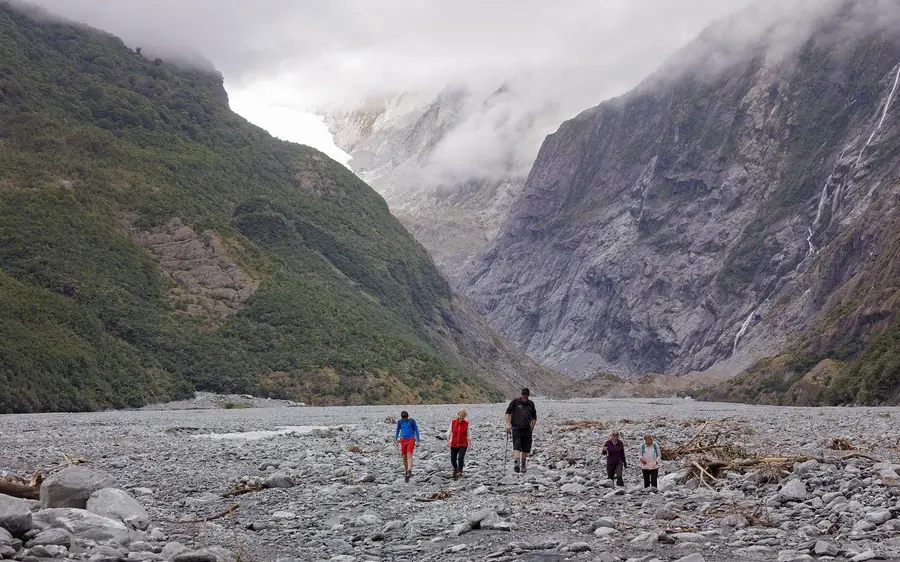
- Three and a half hours, Gentle valley hike through rainforest
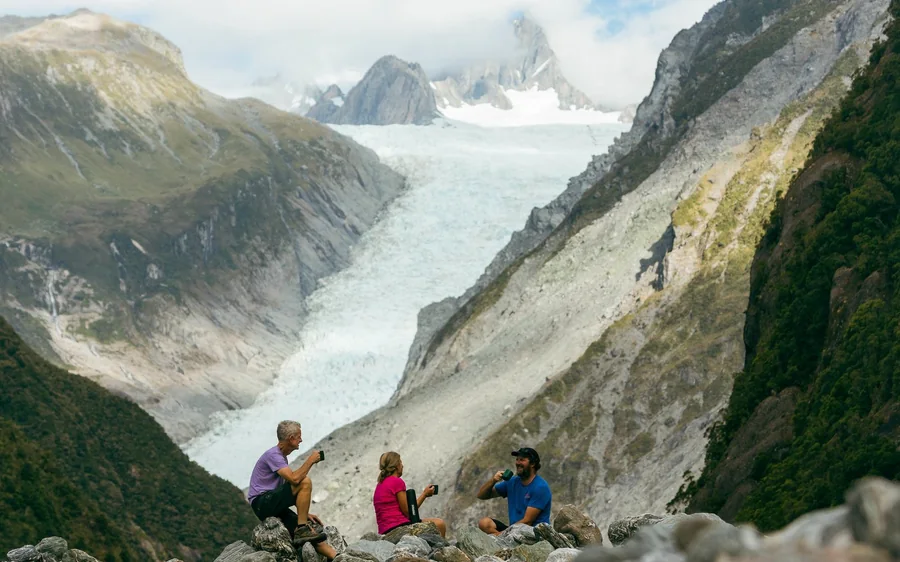
- Views of Fox Glacier and Mount Tasman
- Day trip
- Free cancellation
Layers, boots, rain
A valley walk and a heli hike ask for different things. For the valley you bring your own clothes and a rain jacket, and the walk is a gentle graded track through rainforest. For the ice, the operator fits you with boots, crampons and a jacket at the base before you fly. Here is what to pack for each, what is handed to you, and what to leave in the car.

Quick answer
The short answer. Valley walks: a waterproof jacket, layers you can take off, closed shoes with grip, water, sun cover and insect repellent. Heli hikes: the same layers underneath, because boots, crampons and an outer jacket are supplied at the base. Cotton is the one fabric to leave behind on both.
The valley list
Rain jacket, layers, grippy shoes, water. Everything else is optional.
A waterproof jacket, every month. This is the single item that decides whether a walk on the West Coast is enjoyable. Rain here can arrive quickly and pass just as quickly, and a light shell in a daypack is the difference between carrying on and turning back.
Layers rather than one warm thing. The valleys are cool where the river runs and warm where the forest closes in, and you will take a layer off within twenty minutes of starting. A synthetic or wool base, a fleece or light jumper, and the shell over the top covers every day of the year here.
Closed shoes with grip. The tracks are formed but they are wet ground in a wet climate, with tree roots, gravel and boardwalk in the mix. Trainers with worn soles are the usual regret. Walking shoes or light boots are ideal; sandals are not.
Water, sun cover and repellent. There is nothing to buy once you leave the township, so carry your own water. The cloud on this coast is bright and sunburn through it is common, so a hat and sunscreen earn their place. Sandflies are part of the West Coast, and repellent is what stops them from being the thing you remember.
On the ice
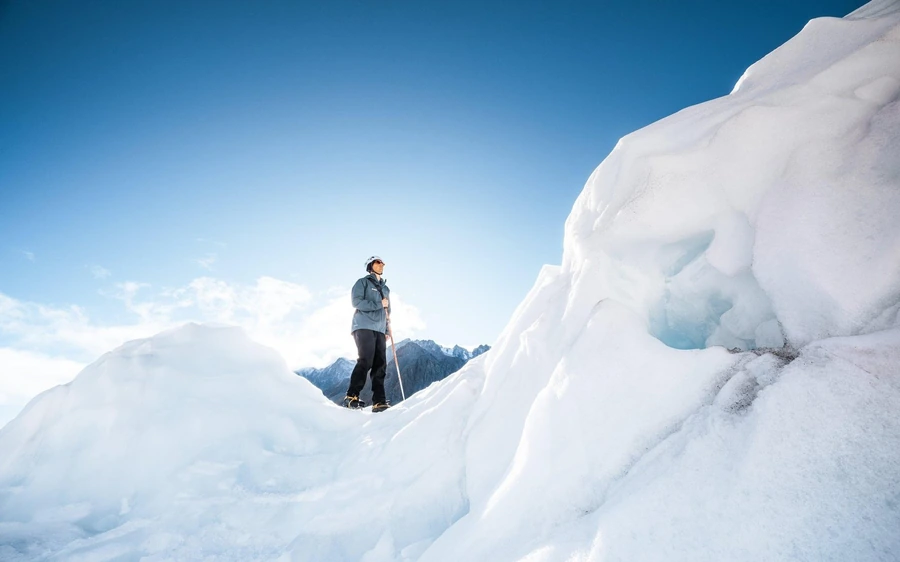
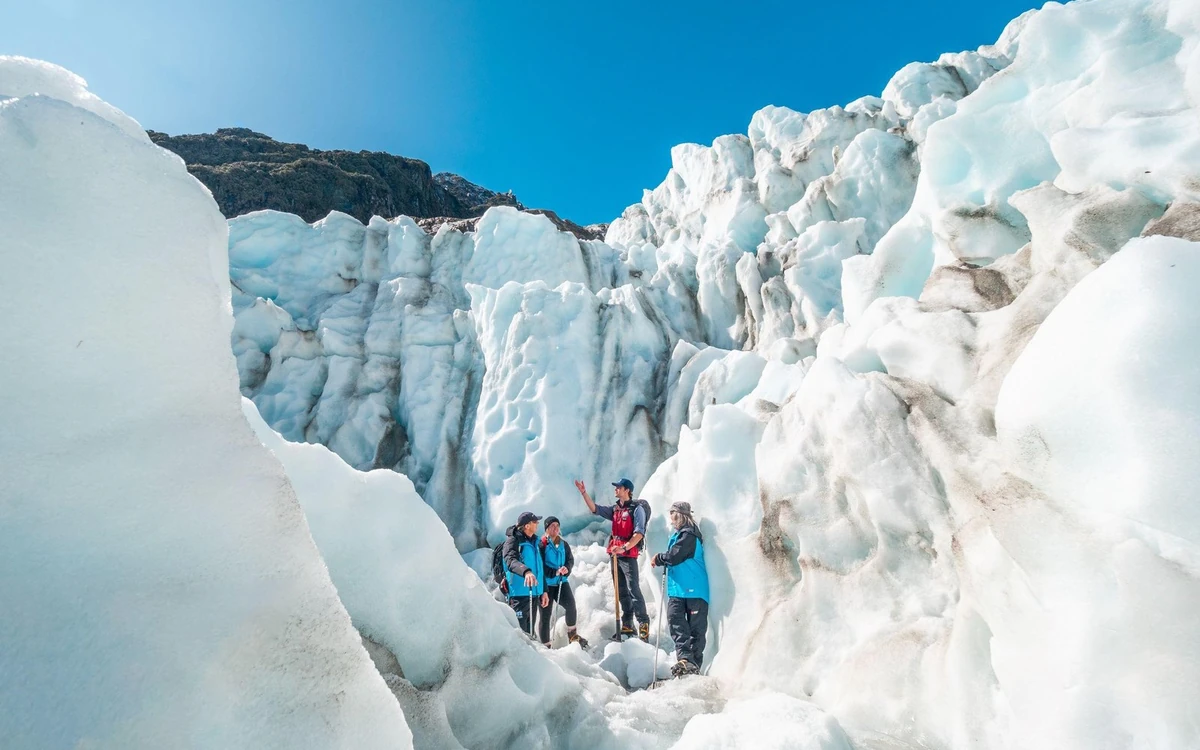
Both heli hikes fit you out at the base before the flight, and the listings say so: boots, crampons and outer layers come with the trip.
Fitted at the base over your own socks, and fitted again on the ice before you walk. The crampons are the part that feels unfamiliar for the first ten minutes and then stops being a thought at all.
Glacier gear comes with the trip at $455 and $514. What you wear underneath is still your decision, and that is where the layers matter.
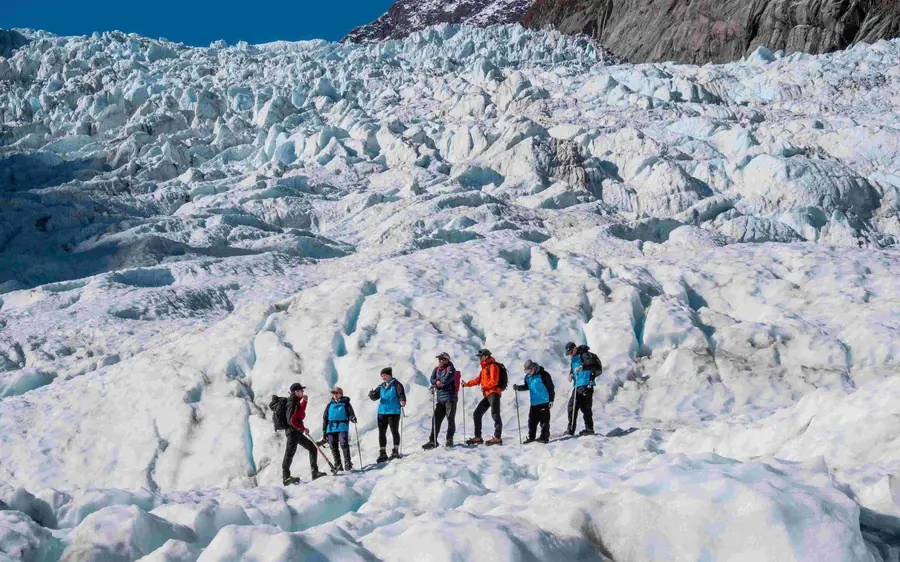
Thermal or wool next to the skin, a warm mid-layer, and no cotton anywhere in the stack. You will be moving on ice for two to three hours with the air moving over it.
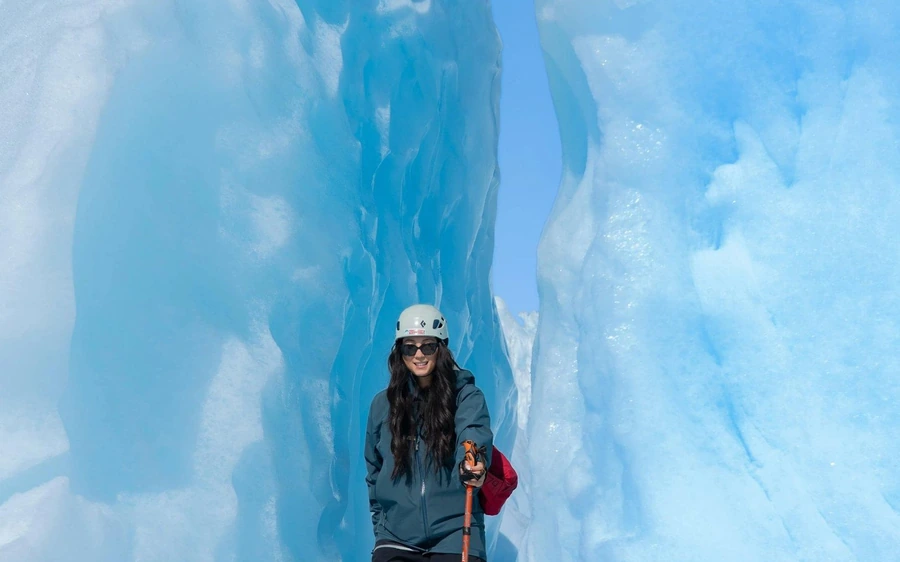
Hands are the first thing to feel it on the ice, especially when you stop for photographs in an ice cave or beside an arch. A thin pair is enough.
Ice reflects light upward as well as down, and the glare on a bright day on the glacier is stronger than anything in the valley below.
Enough for water, a layer and a camera. On the extended day at $886 lunch is included and carried for the group.
Two different days
One day needs a rain jacket. The other needs thermals under gear you are given.
The distinction is worth being clear about, because it drives everything you pack. The valley walks are graded tracks through rainforest to a lookout facing the glacier, and the Fox Glacier listing describes the climb as gentle and gradual, suitable across ages and fitness levels. You walk in your own clothes, at a conversational pace, with a guide talking about geology and the forest around you.
The heli hikes are the other half of the picture: a short flight, a landing, and then two to three hours walking on ice in crampons, following steps cut by the guide. Fox Glacier Guiding gives up to three hours on the ice at $455, Franz Josef Glacier Guides two and a half at $514, and the extended small-group day at $886 spends up to five and a half hours up there with a picnic lunch.
Neither is technical. The valley walk asks for an ordinary level of mobility; the ice asks for the confidence to walk on uneven ground in unfamiliar footwear. Children do the valley walks comfortably — the operators describe them as accessible across ages and fitness — while age and fitness conditions on the ice trips are set by the operator and shown on each listing.
If you want the forest, the river and the view up the valley, pack a rain jacket. If you want to stand on the glacier, pack thermals and let the operator supply the rest.
Packing for the rest of the day
None of these are essential. All of them come up afterwards.
Three hours on a wet valley floor and the drive afterwards are much better separated by clean socks. This is the highest-value item on the list for the space it takes.
The kayak tours at $85 and $102 are sheltered paddling rather than swimming, but paddles drip and boats are wet where you sit.
Phones in wet hands are the usual casualty. A strap, a pocket you can close, or a cheap dry bag covers it — and both kayak listings include photos of your tour, which takes some of the pressure off.
The valley walks include a hot drink stop — both Glacier Valley Eco Tours walks list tea, coffee and a biscuit — but there is nothing to buy between the base and the lookout.
Late-afternoon returns from Lake Matheson at $69 or an evening lake trip are cooler than the walk that preceded them, and the car park is not where you want to discover that.
Deciding between the two? The comparison, with times and prices.
Valley walk or heli hike?→Book direct
Two valley walks you dress yourself for, and three ice days where the gear is supplied.
★ 4.7 · 188 reviews
★ 4.8 · 169 reviews
★ 4.9 · 363 reviews
★ 4.8 · 399 reviews
★ 5 · 1 review
Common questions
A waterproof jacket, layers you can remove, and closed shoes with grip. Add water, a hat, sunscreen and insect repellent. Avoid cotton and avoid sandals — the tracks are formed but they are wet ground in a wet climate.
Walking shoes or light boots are ideal, and any closed shoe with good grip will do. The tracks are graded rather than technical; the Fox Glacier walk is described by its operator as a gentle, gradual climb suitable across ages and fitness levels.
Boots, crampons and an outer jacket are supplied at the base before you fly, on both the Fox Glacier trip at $455 and the Franz Josef trip at $514. You bring the base layers, gloves, hat and sunglasses.
The valley walks suit families well and the operators describe them as accessible across ages and fitness levels. For the ice trips, the age and fitness conditions are set by the operator and listed on each booking page — check them before you book.
For the valley, an ordinary level of mobility over three to three and a half hours, mostly gentle. For the ice, the demand is balance and patience rather than strength: two to three hours on uneven ground in crampons at a guided pace.
Cotton clothing, worn-out trainers and anything you do not want to carry for three hours. On the ice trips, leave the heavy outer jacket in the car — that part is supplied.
Go deeper
When to walk the Franz Josef and Fox Glacier valleys — seasons, rain, daylight and the hours that give the clearest view up the valley.
Can you walk to the glacier?You can walk the free valley track to the Franz Josef Glacier lookout in about 90 minutes return.
Fox Glacier walksWalking at Fox Glacier — the valley track through rainforest, the viewpoints, Lake Matheson, and the guided half-day at $63 with transfers from Franz Josef.
Hiking without a helicopterWhat you can hike at Franz Josef and Fox on the ground: guided valley walks from $63, what a guide adds, and where the walking ends and the ice begins.
Every walk at Franz JosefEvery Franz Josef Glacier walk compared — the free valley track to the lookout, guided walks from $63, and the heli hikes onto the ice from $455.
Free and self-guidedFranz Josef Glacier walk free: which valley tracks cost nothing, what the guided walks at $63 add on top, and when each one is the right call.